Global social media statistics help us see how people everywhere connect, share information, and form online communities. Platforms like Instagram, TikTok, YouTube, and local networks like RedNote have changed how we interact online. By examining usage rates, demographics, and engagement, communication professionals can better understand how audiences behave across cultures and regions. These numbers are especially useful for branding, marketing, and public relations because they show how digital strategies must adapt to different audiences. As social media continues to evolve, understanding these trends helps communicators create content that is ethical, effective, and culturally sensitive.
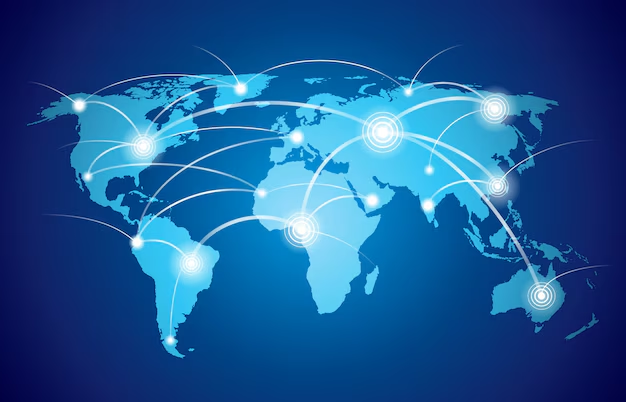
Social media has evolved rapidly since the early 2000s, beginning with sites like MySpace and Facebook and expanding into a global network of online communities. Research from the Pew Research Center and other international reports shows that people of all ages and from all regions are using social media more, with mobile devices helping drive this growth. Over the years, these platforms have moved from basic social connections to complex systems that shape how we get news, see ads, and follow cultural trends. Recent statistics show that video-based platforms are becoming increasingly popular, and new networks are emerging across different regions, so digital communication is no longer focused solely on Western users. These changes indicate that social media is now a key tool for global communication, branding, and information sharing.
 Alina Jae